What can chiropractic treatment help with?
Chiropractic care is most often sought for neck pain, back pain, and headaches — and those are also where the research support is strongest. Current international guidelines recommend spinal manipulation as a first-line option for low back pain, before medication or imaging in most uncomplicated cases.
At our Jerusalem clinic we regularly treat:
- Lower back pain — the most common reason patients come to us
- Neck pain and stiffness
- Headaches and migraines that start in the neck
- Sciatica and pain radiating down the leg
- Herniated and bulging discs
- Pregnancy-related back and pelvic pain (Webster Technique)
- Sports injuries
- Shoulder pain
- Posture problems and scoliosis
- Jaw (TMJ) pain
- Children and infants — with specifically gentle techniques
Not sure your problem is on this list? Send us a WhatsApp message describing it — we'll tell you honestly whether chiropractic care is appropriate or whether you should see a physician first.
How does an adjustment actually work?
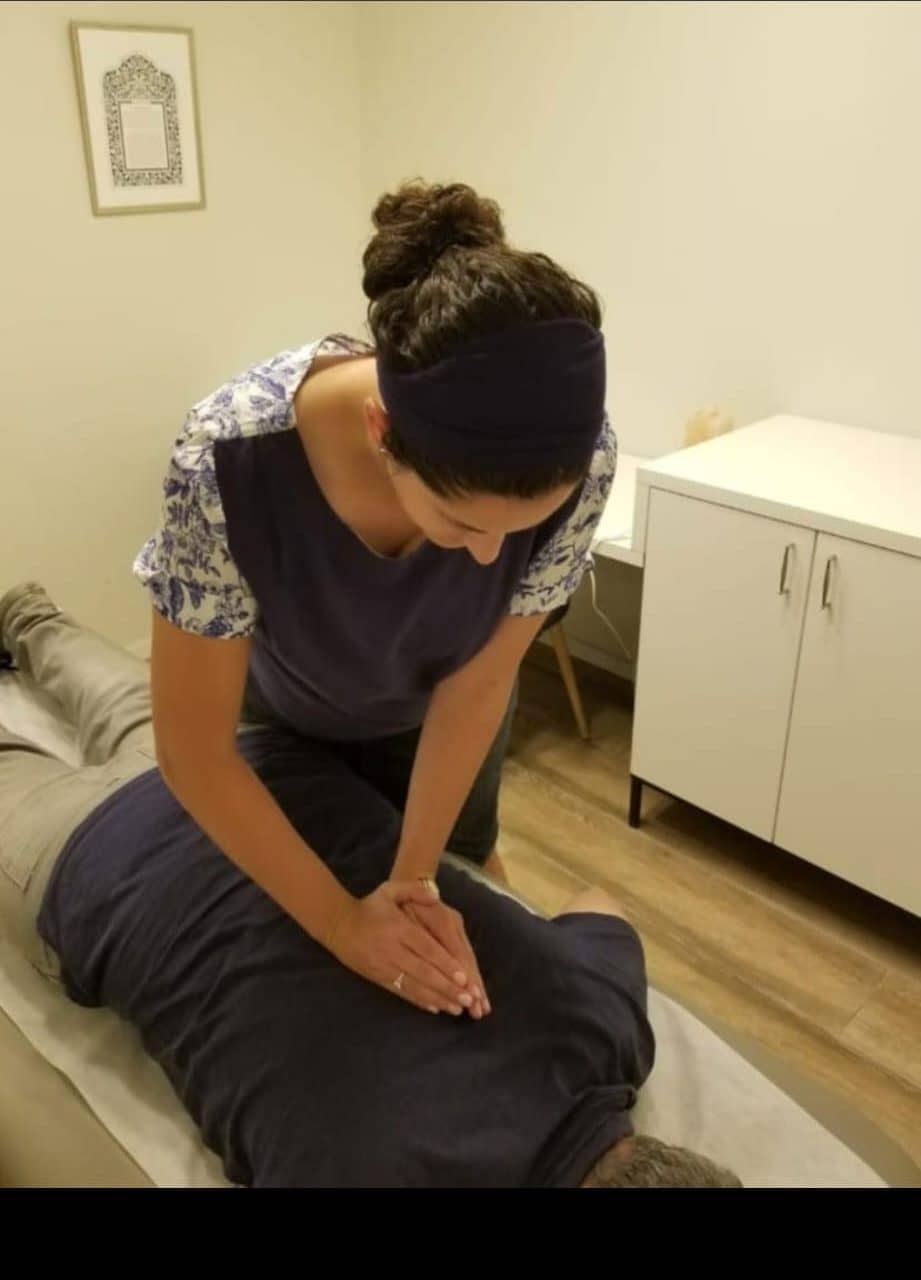
When a joint loses its normal mobility, the structures around it compensate: muscles guard, nerves get irritated, movement hurts. An adjustment applies a quick, precisely targeted force that restores the joint's normal motion — which reduces the muscle guarding and nerve irritation around it. Read more about chiropractic adjustments →
Does chiropractic care actually work? What the research says
Honest answer: it depends on the condition. For low back pain, spinal manipulation is recommended in major clinical guidelines — including the American College of Physicians' — as a first-line, non-drug treatment. For neck pain and cervicogenic headaches (headaches driven by neck dysfunction), studies show meaningful benefit, especially combined with exercise — which is why every treatment plan at our clinic includes one. For conditions outside the musculoskeletal system, chiropractic is not a treatment, and we'll tell you so.
What we don't do: promise cures, sell open-ended treatment packages, or continue care that isn't producing measurable improvement. If you're not progressing as expected, we reassess or refer.
What happens at your first visit?
The longest part is the conversation: a thorough history of your complaint and health background. Then a physical examination — posture, range of motion, orthopedic and neurological tests. You'll get a plain-language explanation of what we found and what we recommend, and in most cases treatment begins the same day. If you have recent imaging (X-ray, MRI, CT), bring it — but don't get imaging just for us; we'll tell you if it's needed. More about your first visit →
Is chiropractic care safe?
For appropriate musculoskeletal conditions, yes — mild soreness for a day or two after treatment is the most common side effect; serious complications are exceptionally rare. Safety starts with screening: the examination is designed to catch red flags that need a physician instead of a chiropractor, and we refer when we find them. Our clinicians also use low-force techniques (including instrument-assisted and Cox flexion-distraction methods) adapted for the elderly, for infants, and for pregnancy.
How many visits will I need?
An honest range: most uncomplicated cases improve noticeably within 4–8 visits. Acute problems sometimes resolve in fewer; chronic, long-standing issues can take longer. You'll have an expected timeline after the first examination — and if progress stalls, we change the plan rather than repeat it.
Which techniques do we use?
The right technique depends on your condition, age, and preference — from classic manual adjustments to instrument-assisted and soft-tissue methods:
- Chiropractic adjustments
- Active Release Technique®
- Webster Technique (pregnancy)
- Muscle work
- Exercises & stretches
Is chiropractic recognized in Israel?
Yes. Chiropractors in Israel are university-trained (a Doctor of Chiropractic degree typically takes 4–6 years after undergraduate studies) and the profession is represented by the Israel Chiropractic Society (ICS), where Dr. Raimi Tuchinsky formerly served on the board. All three of our clinicians trained abroad — in the United States and France — passed national board examinations, and are members of international professional associations including the ACA and ICPA.
How much does treatment cost — and does my kupat cholim help?
Sessions are priced per visit, with no packages required — contact us for current fees. Visits at our clinic are private: kupot cholim generally subsidize treatment through their own complementary-medicine networks and may not reimburse treatment here. Some private policies provide reimbursement subject to their terms — check your plan before booking. See our full cost & insurance FAQ →