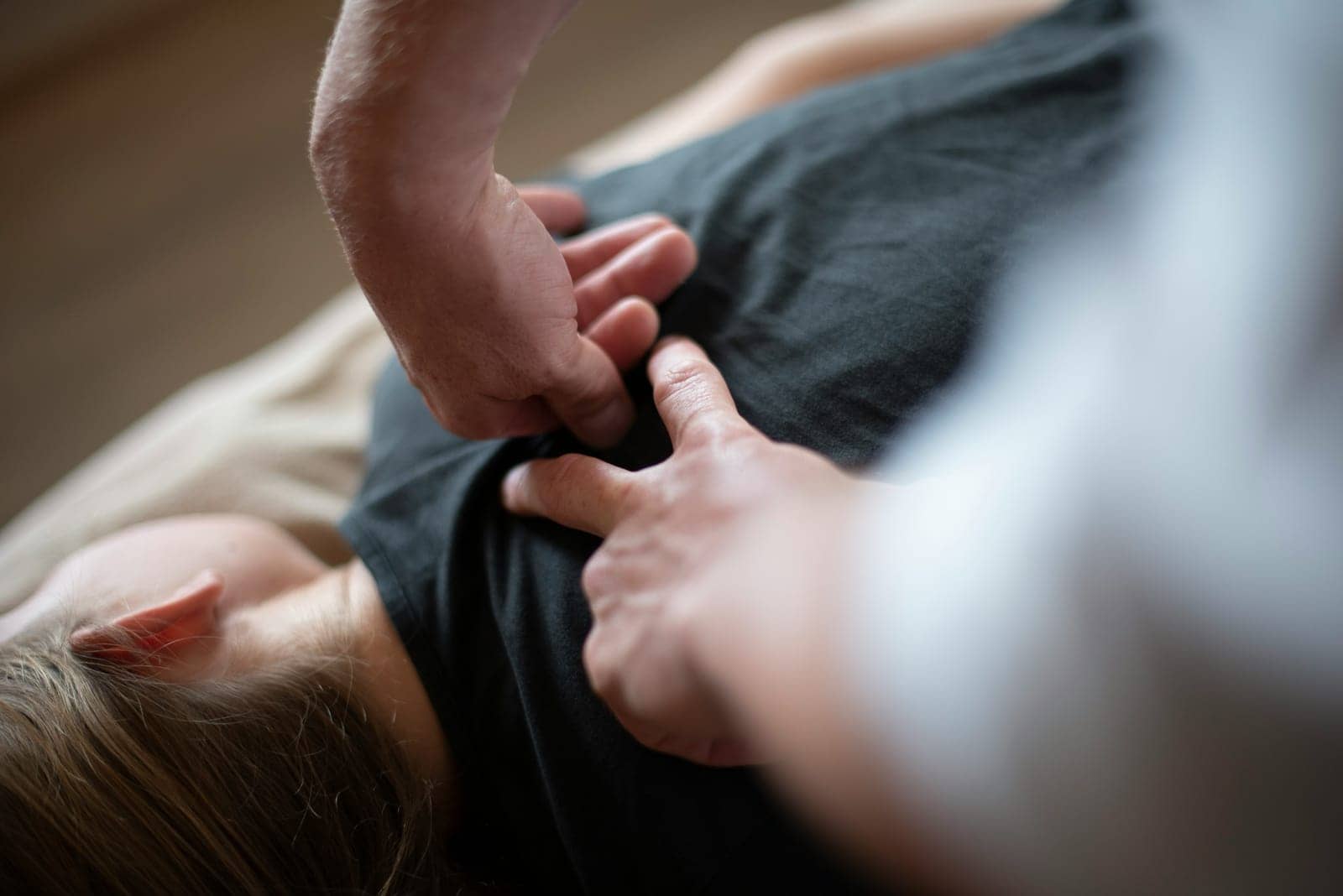
What happens during an adjustment at our clinic?
Every adjustment starts with assessment, not the table. Your doctor checks how the joint is moving, positions you precisely — lying or seated, depending on the area — and applies a quick, controlled thrust to the restricted joint. You may hear a pop (that's gas releasing in the joint fluid, not bone), feel an immediate change in movement, or feel nothing dramatic at all. The doctor then rechecks the joint. The adjustment itself takes seconds; the skill is in knowing exactly where, in which direction, and how much.
Every joint in the body can be adjusted — not just the spine. This makes adjustments extremely versatile and useful in the treatment of back pain, neck pain and headaches, as well as shoulder, hip, knee and foot problems.
What can adjustments help with?
The strongest research support is for low back pain:the American College of Physicians includes spinal manipulation among recommended first-line, non-drug treatments. Evidence also supports adjustments as part of care for neck pain and tension-type and cervicogenic headaches (headaches that start in the neck). We'll be straight with you about what adjustments can and can't do — chiropractic treats joints, muscles and nerves, not internal-organ disease.
Is it safe? And who shouldn't be adjusted?
Serious complications from chiropractic adjustment are exceptionally rare, and mild post-treatment soreness for a day or two is the most common side effect. Safety starts with screening: your first visit includes a full history and examination precisely so we can identify conditions — such as severe osteoporosis, fractures, or certain neurological signs — where adjustment isn't appropriate. In those cases we use gentler techniques or refer you to the right physician. Dr. White in particular has advanced training in gentle, low-force techniques adapted for the elderly and for infants.
How many visits will I need?
It depends on how long the problem has been there and how your body responds. Many patients with a recent, straightforward issue feel meaningful improvement within the first few visits; longstanding problems usually take longer. You'll get an honest estimate at your report of findings after the first examination — and we reassess progress at every visit rather than locking you into a long prepaid plan.
Techniques we use
- Diversified — the classic hands-on adjustment most people picture.
- Gentle low-force adjusting — lighter options for sensitive patients and anyone who needs (or prefers) an adjustment without a manual thrust.
- Targeted soft-tissue work — releasing the tight muscles and adhesions around the joint so the adjustment holds.
- SOT and Cranial-Sacral — gentle approaches used where indicated.
Your doctor chooses the technique for your body and comfort level — and adjustments are usually combined with muscle work and exercises so the improvement holds.